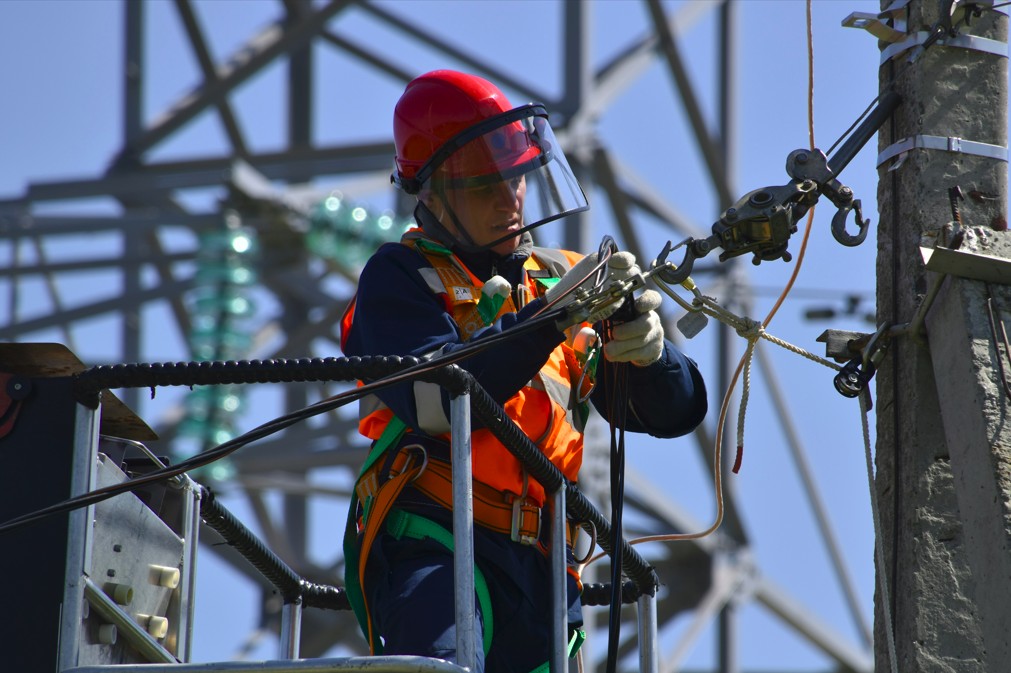
I was leading a seminar once for the largest electric utility in California, and the corporate Director of Safety was in the class. We talked a bit before the class to get acquainted, and I asked him what his job consisted of.
“My job is to keep people from dying,” he said.
That got my attention. So, I pressed further.
He continued, “Electricity can kill people if you don’t respect it. So, I make sure that people know exactly what can happen and then make the right choices when they’re working with it. A couple of people die every year because they take it for granted.”
Then he said something I didn’t expect.
“Honestly, I don’t completely understand electricity. I have my graduate degree in it, but I still have trouble grasping the concept of how it works. I’m amazed by it – enough that I’ve built my career around it.”
A degree in electricity—and he still didn’t completely understand it?
“I have the utmost respect for it,” he said, “and I’ve learned how to work with it to get the best results. Our people don’t have to understand it completely either, but they have to know how it works so they keep from getting hurt while capturing its power.”
What a great illustration, I thought.
Everybody’s different
I think that can apply in any type of relationship, whether it’s marriage, family, employment, friendship – or people we’ve just met.
We’re all different. And sometimes those differences don’t make complete sense to us.
Most of us are drawn to people who think the same way we do. It’s comfortable and familiar. Those similarities make it easy to connect with other people, and they give us a great place to start any relationship.
But there’s nobody who’s just like us. Nobody. We’re all unique.
And that’s a good thing.
Actually, it’s a great thing. The similarities are really comfortable. Those differences can be uncomfortable when they start showing up.
When they do, we start thinking, “Whoa . . . I wasn’t expecting that. It doesn’t feel good.” And we might start thinking they’re just a little bit crazy.
We often start seeing those differences in one of two ways:
- Things that need to be fixed.
- Things I need to learn to cope with.
Either way, it can be unhealthy. It assumes that those differences are negative, and we either need to get them to change or that it’ll just be something we try not to talk about.
But there’s a third option: We can embrace those differences.
I’m not talking about those differences that are harmful or unethical or destructive. I’m talking about normal differences in personality, preferences and ways of thinking. Those kinds of differences can become the ingredients for growing a thriving relationship that’s stronger than if we were exactly alike.
It doesn’t mean we’ll completely understand them. We might not share their perspective, and respecting it doesn’t have to mean we agree with it. But we can still value what they bring to the relationship.
Similarities are like a healthy, familiar meal. Differences add the spices that give the meal flavor.
Respect changes the conversation
Think about someone in your life who sees things differently than you do.
Maybe it’s your spouse, or one of your kids or their friends. Maybe it’s someone you work with or that one extended family member who tends to make holiday gatherings . . . well, interesting.
You might look at the way they think or respond and wonder, How could anybody think that way? That’s crazy!
They might be thinking the same thing about you.
We tend to write our own instruction manual for life from our own frame of reference. It’s what we know.
The problem comes when we expect somebody else to follow it.
It’s easy to see another person as someone who needs to be repaired so they’ll think the way we do. But it’s not about change; it’s about connection.
Maybe the other person sees something we can’t see from where we’re standing.
Their difference might actually contribute something I couldn’t contribute myself.
We don’t have to fully understand every difference before we respect it. We can move from tolerating differences to valuing differences.
The safety director had spent his career working with electricity. He had a degree in it. He knew how powerful it was.
And he still said, “I don’t understand electricity.”
But he respected it.
He learned how it worked.
And he learned how to work with it instead of taking it for granted.
It feels like there’s some kind of lesson there. Who do you know that you could apply it to?