
Years ago, my granddaughter got a box of worms in the mail.
I was at my daughter Sara’s house one morning, helping her with a few projects. Her kids were at a summer program at church, so we had the house to ourselves.
Sara left to pick them up, and I stayed behind working in the garage.
A FedEx truck pulled up. The driver handed me a small package, which I took inside and left on the counter.
When my granddaughter Averie got home, she was pretty excited. She opened the box, pulled out the packing material, then removed a small round container and took off the lid.
Worms. Lots of short, wiggly worms.
She was thrilled.
I was just fine letting her be thrilled by herself.
The worms weren’t pets. They were lunch.
Averie had a bearded dragon named Leia (after Princess Leia of Star Wars fame). She had saved her money to buy Leia and had spent a lot of time learning how to take care of her.
Leia lived in a terrarium in Averie’s room. She had a shelter to sleep in, a food bowl, rocks to climb on and a heating lamp where she could warm herself.
She also had a hammock.
Leia was one happy bearded dragon.
Averie did her homework
Before she ever brought Leia home, Averie learned everything she could about bearded dragons.
- What do they eat?
- How do they sleep?
- What temperature do they need?
- What keeps them healthy?
- What do they need to thrive?
She didn’t bring Leia home and then get frustrated because she didn’t act like a dog. She didn’t complain because Leia wouldn’t fetch a ball. She learned what a bearded dragon was like and adjusted her expectations accordingly.
We do that with our pets all the time.
We study them. We learn what they like and don’t like. We notice their behavior. We figure out when they need to be petted or fed or exercised or given space.
Once we understand them, we enjoy them just the way they are.
It made me wonder:
Am I that intentional with people?
Sometimes I think we put more energy into figuring out our pets than figuring out the people closest to us.
It’s not because we don’t care about them; we just assume we already know.
I think we tend to give people what we need or like.
- If I need encouragement when I’m having a tough day, I assume you do, too.
- If talking through a problem helps me process it, I assume you want the same thing.
- If I need some space when I’m stressed, I give you space—when what you really need is somebody to sit down and listen.
Then we get frustrated when it doesn’t work:
I’m trying to help. Why aren’t they responding?
Maybe the problem isn’t that we don’t care. Maybe we just haven’t studied the person the way we study our pets.
So, how do we figure them out?
People don’t come with instructions; they come with clues.
We can watch. We can listen. We can ask questions:
- What makes this person come alive?
- What drains them?
- How do they respond when they’re discouraged?
- Do they need advice—or do they mostly need someone to listen?
- What makes them feel noticed and valued?
- What helps them feel safe?
Some people tend to process out loud. Others need to disappear for a while and figure out their thoughts before they’re ready to talk.
Some people love surprises. Others would prefer three weeks’ notice and a detailed itinerary.
Some people feel cared for when you jump in and help. Others feel cared for when you trust them enough to handle things themselves.
None of those approaches are necessarily right or wrong.
They’re clues.
Try studying someone
Think about one person who matters to you. Instead of asking, “Why don’t they respond the way I would?” try asking:
“What helps this particular person thrive?”
You might already know the answer. Or you might figure out that you’ve been giving them what you would want instead of what they actually need.
It just means becoming a student of the people you care about.
Averie didn’t expect Leia to become something other than a bearded dragon. She learned what Leia needed, and she took care of her accordingly.
Obviously, people are a little more complicated than a bearded dragon. But maybe it’s not a bad place to start, right?
Become a student of the person in front of you.
It’s a whole lot more effective, and you don’t have to wait for the FedEx truck to bring worms.
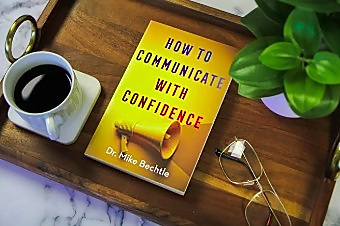 Want more help with your communication and relationship skills? Pick up a copy of How to Communicate with Confidence. It’s just been repackaged (the original sold over 100,000 copies), and the audio book is currently cheaper ($10.54) than the paperback ($11.64) on Amazon. Plus, I get to spend a few hours talking to you! Here’s the Amazon link, but you can order it anywhere books are sold.
Been to a locally-owned bookstore lately? Check one out near you to order – it might not be as convenient as Amazon, but it’ll sure be a lot more fun!